American Energy and Prosperity:
A Historical Timeline

Energy has been the backbone of America’s rise to prosperity, fueling economic growth, improving the quality of life, and securing the nation’s global status. Over time, the United States has transitioned from using wood, water, and biomass to coal, oil, natural gas, and nuclear energy, each bringing innovations and benefits to the American people. Throughout our history, abundant energy has enabled cross-country travel, air flight, modern conveniences, and even victory in global wars, directly impacting everyday life.

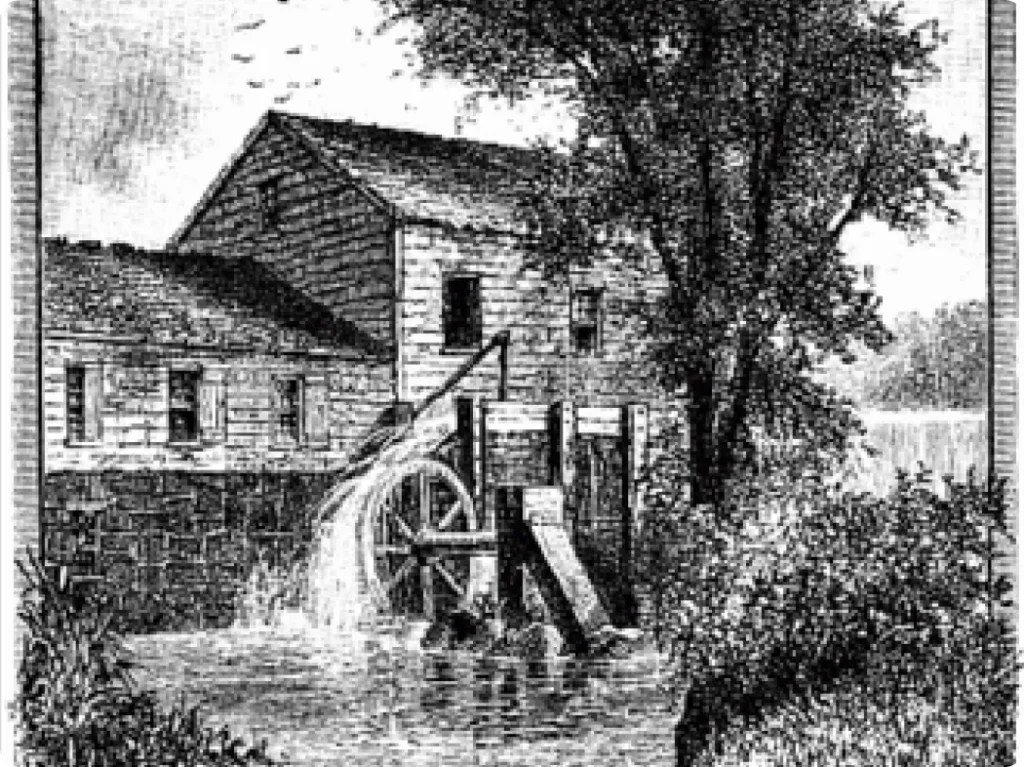
A black and white illustration of an old wooden watermill by a river, with water flowing over a large wheel and trees in the background.
Impact Life revolved around sunlight and seasonal labor. Water-powered mills increased output modestly. Lighting was dim and expensive until petroleum disrupted the whale oil market.
Era of Wood and Water
Colonial Era–1840s
Foundations of a Nation

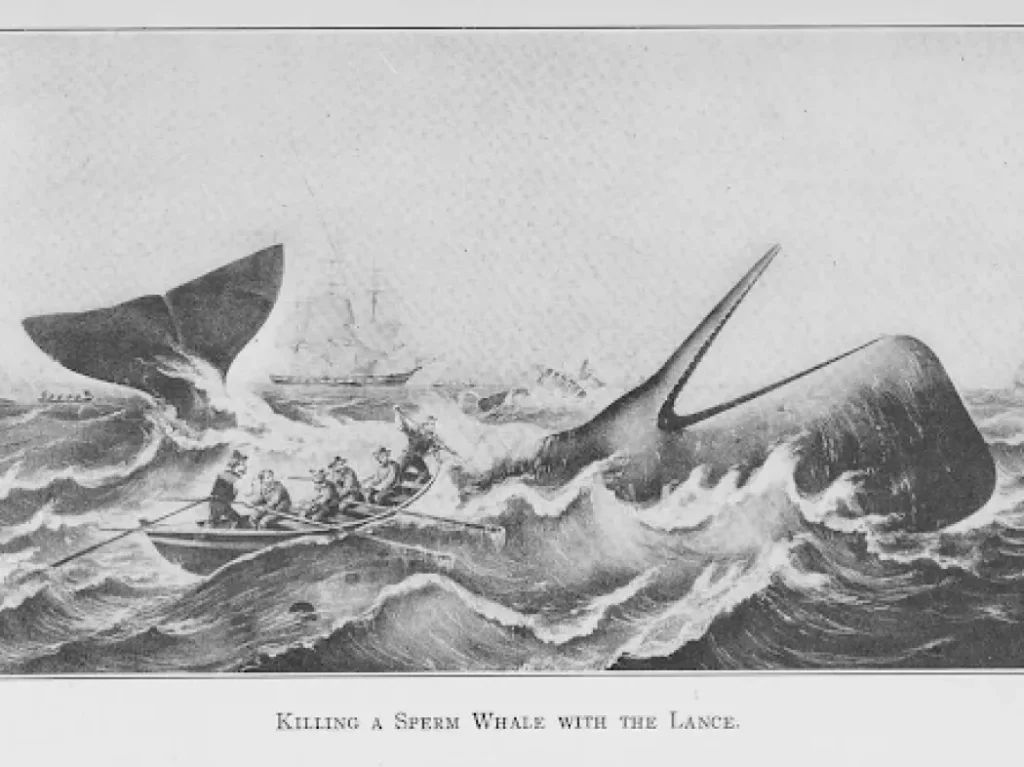
Early America depended on local biomass and mechanical energy. Wood, waterwheels, and windmills sustained small agrarian communities and trades. Though labor-intensive and limited in scale, these sources helped establish the base of a self-sufficient republic. Wood and water were the primary sources for heating, cooking, and small industry. Forests were abundant, and settlers learned to harness water power for gristmills and sawmills, enabling localized manufacturing. Whale oil was used for lighting, but it was costly and inaccessible to most. Limited availability and high prices kept most homes dark at night.

Impact Life revolved around sunlight and seasonal labor. Water-powered mills increased output modestly. Lighting was dim and expensive until petroleum disrupted the whale oil market.
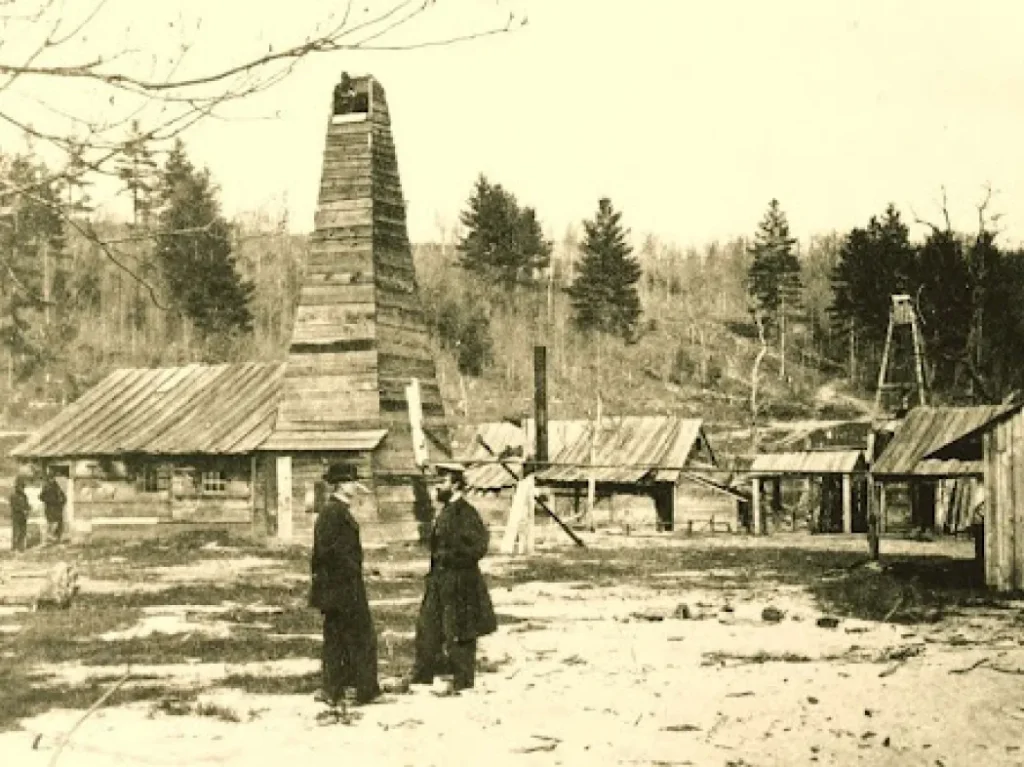
Sepia-toned photo of an early oil drilling site with a wooden derrick, several wooden buildings, and a few people in period clothing standing in the foreground. Trees and rolling hills are in the background.
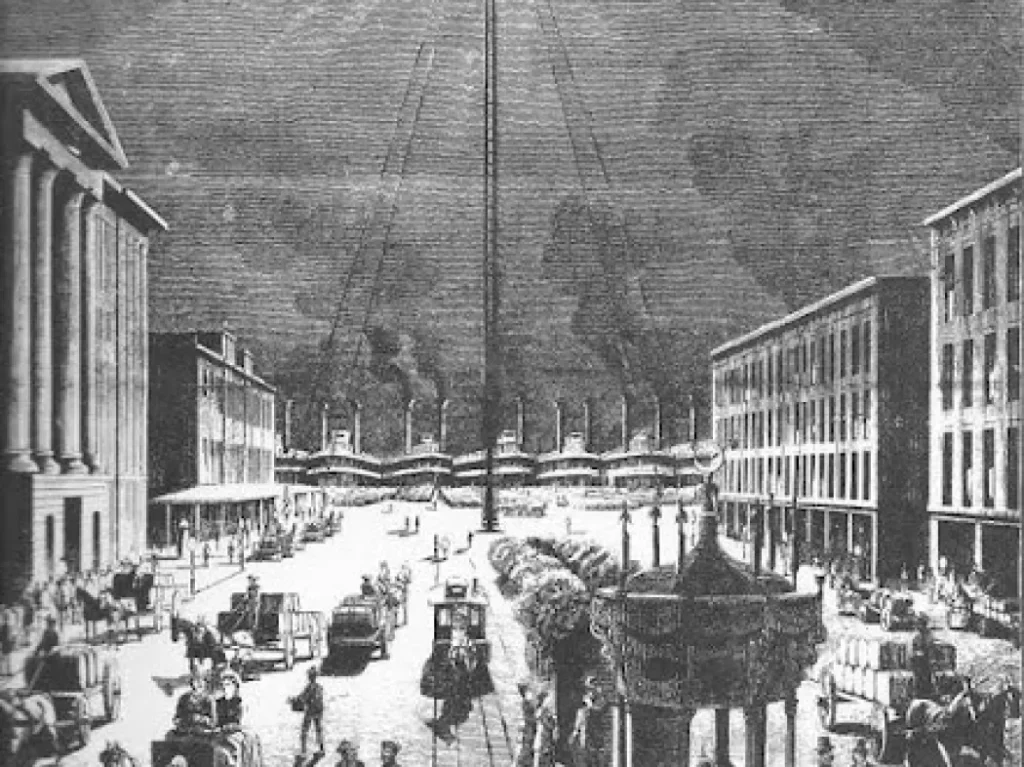
A black-and-white vintage illustration of a busy city street with horse-drawn carriages, people walking, historic buildings, and a tall pole or structure rising in the center. Factories with smokestacks are visible in the background.
A vintage illustration showing sailors in a small boat attacking a large sperm whale with lances, as the whale thrashes in rough seas. A sailing ship is visible in the background.
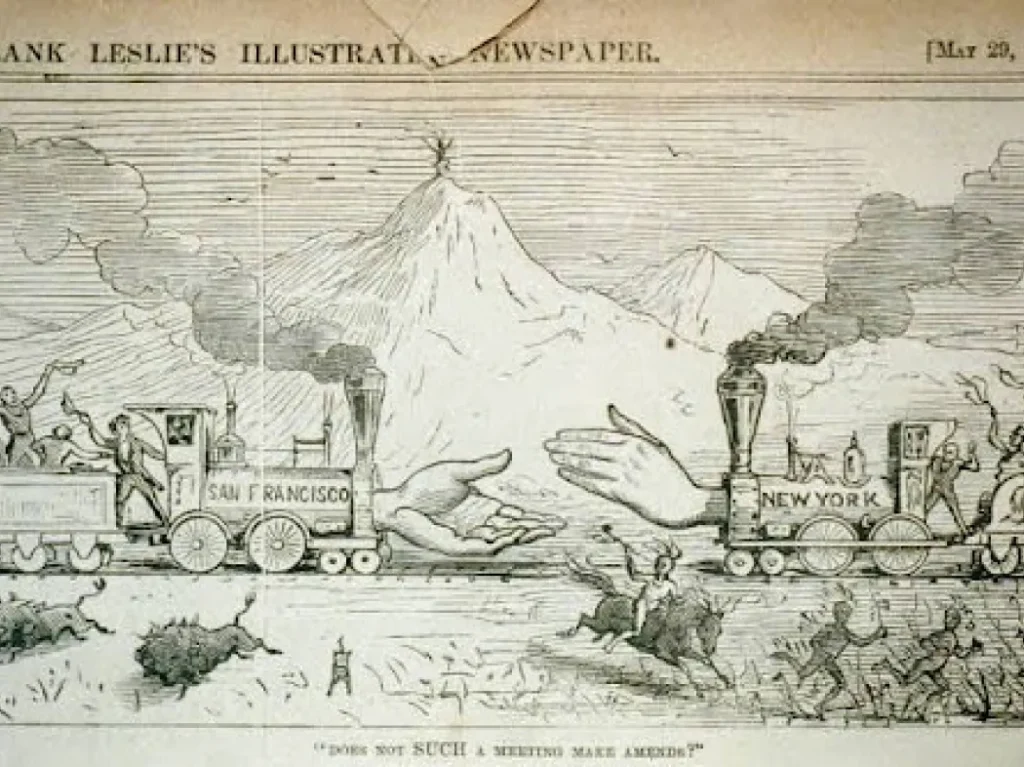
A vintage newspaper illustration shows two steam trains labeled "San Francisco" and "New York" meeting on tracks, with large hands extending from each train to shake, symbolizing the connection between the coasts. A mountain is in the background.
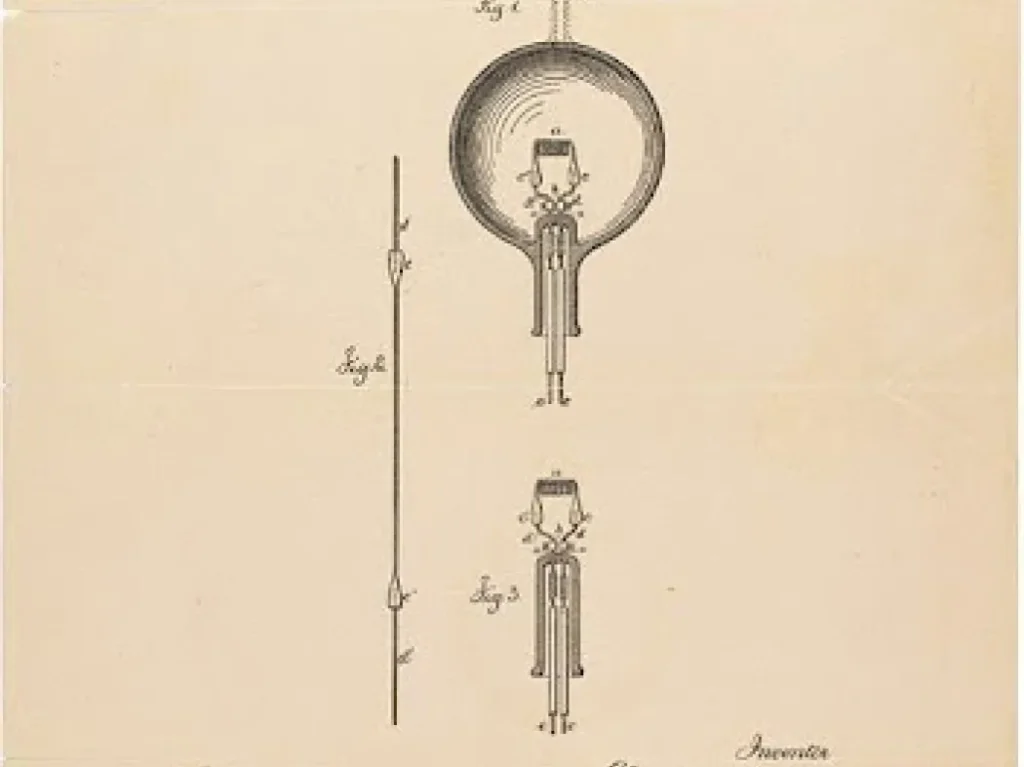
A vintage technical drawing of an early light bulb design, showing labeled diagrams from different angles, including a cross-section and detailed internal components.
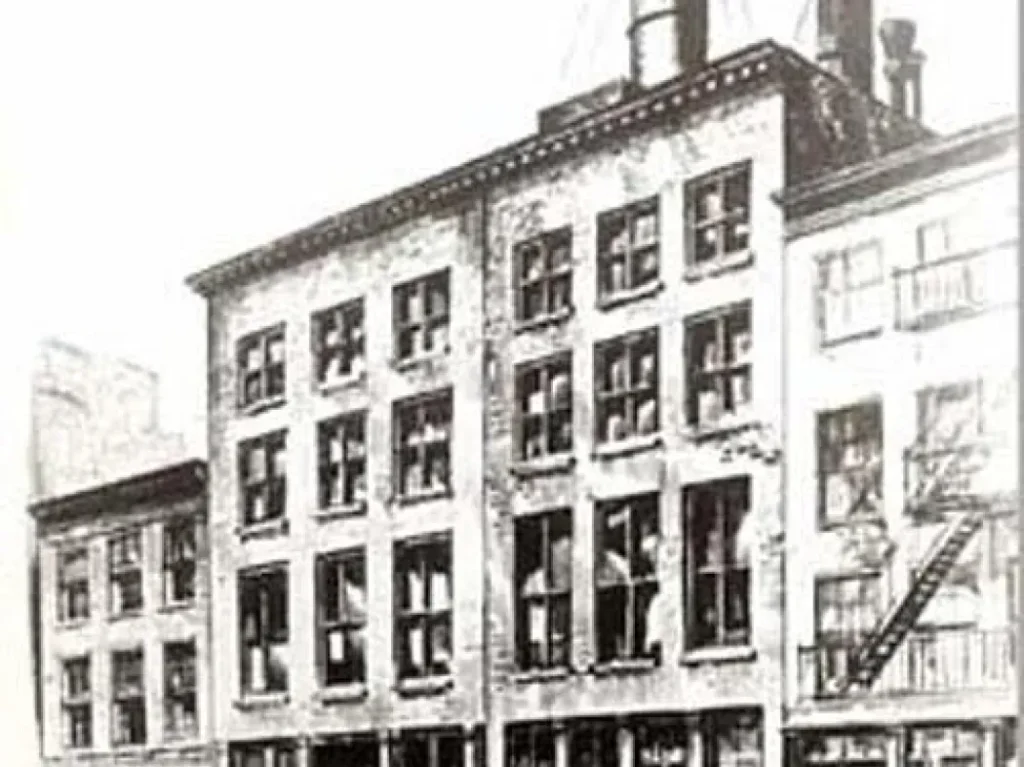
A black-and-white photo of an old multi-story factory building with many windows, some open. A fire escape is attached to the side, and there are water tanks and chimneys on the roof.
Impact Steam and coal drove rail, industry, and shipping. Telegraphs improved coordination. Urban living expanded. Kerosene brought clean, affordable light to middle-class homes.
Era of Coal, Steam, and Telegraph
1850s–1890s
Powering the Industrial Revolution

Coal and steam engines unleashed the Industrial Revolution. Private enterprise laid railroads, opened new mines, and expanded manufacturing capacity, enabling national connectivity, increased productivity, and rising standards of living.

1859 — Drake Well: Edwin Drake drilled the first successful U.S. oil well in Pennsylvania. This launched the domestic petroleum industry, creating a new and scalable source of energy that replaced whale oil and eventually fueled transportation.

1850s–60s — Urban gas lighting spreads: Coal gas was piped into homes and streets, making evening activity safer and more productive. Cities became more vibrant and economically dynamic.

1860s–70s — Kerosene lights American homes: Petroleum-derived kerosene replaced expensive lamp fuels, including whale oil, bringing affordable lighting to millions of American homes. The new illuminant expanded productive hours for families and businesses.

1869 — Transcontinental Railroad completed: Steam locomotives linked eastern markets with western resources. This accelerated commerce, migration, and access to new territories rich in natural resources.

1879 — Edison’s Light Bulb: After years of experimentation at his Menlo Park, New Jersey laboratory, Edison demonstrated a long-lasting incandescent bulb that could illuminate for several hours without burning out. It spurred investment in electric infrastructure and transformed night into usable time.

1882 — Pearl Street Station opens: Thomas Edison’s coal-fired Pearl Street Station began operation in Lower Manhattan on September 4, 1882. Built by the Edison Illuminating Company, the station generated direct-current electricity for the surrounding “First District,” roughly a quarter-square-mile area of the city. Initially serving about 400 lamps for fewer than 100 customers, the system quickly expanded to power more than 10,000 lamps. Pearl Street demonstrated the feasibility of centralized electric generation and distribution, establishing the model for the emerging electric utility industry.

Impact Steam and coal drove rail, industry, and shipping. Telegraphs improved coordination. Urban living expanded. Kerosene brought clean, affordable light to middle-class homes.
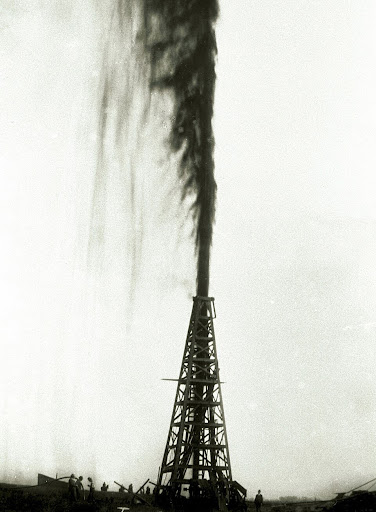
A tall oil derrick gushes a large stream of dark oil high into the air, with several small figures of people standing nearby, silhouetted against a pale sky.
Nine rectangular samples of Bakelite in various marbled colors, including yellow, red, green, and orange, displayed in a 3x3 grid under the heading "New Bakelite Jewel Quality Colors." Each sample is numbered 1 to 9.
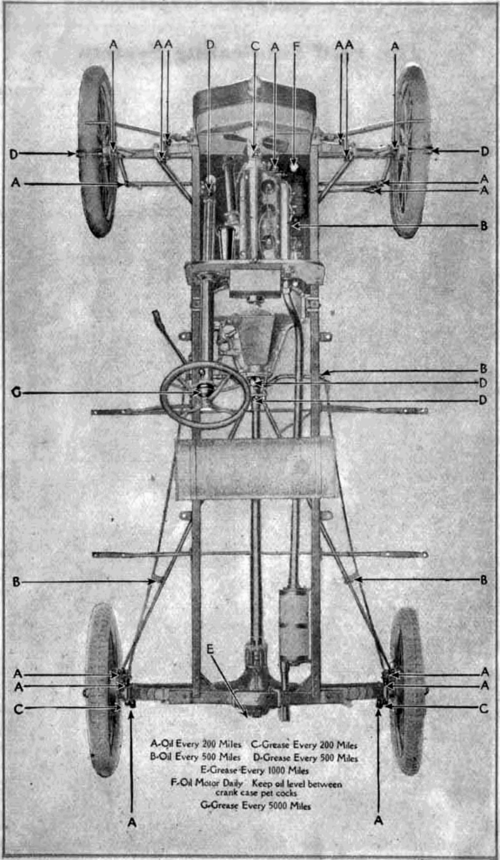
Overhead diagram of a vintage car chassis with labeled parts, wheels, engine, and lubrication points, accompanied by a key indicating maintenance intervals for oiling, greasing, and checking the motor and starter.
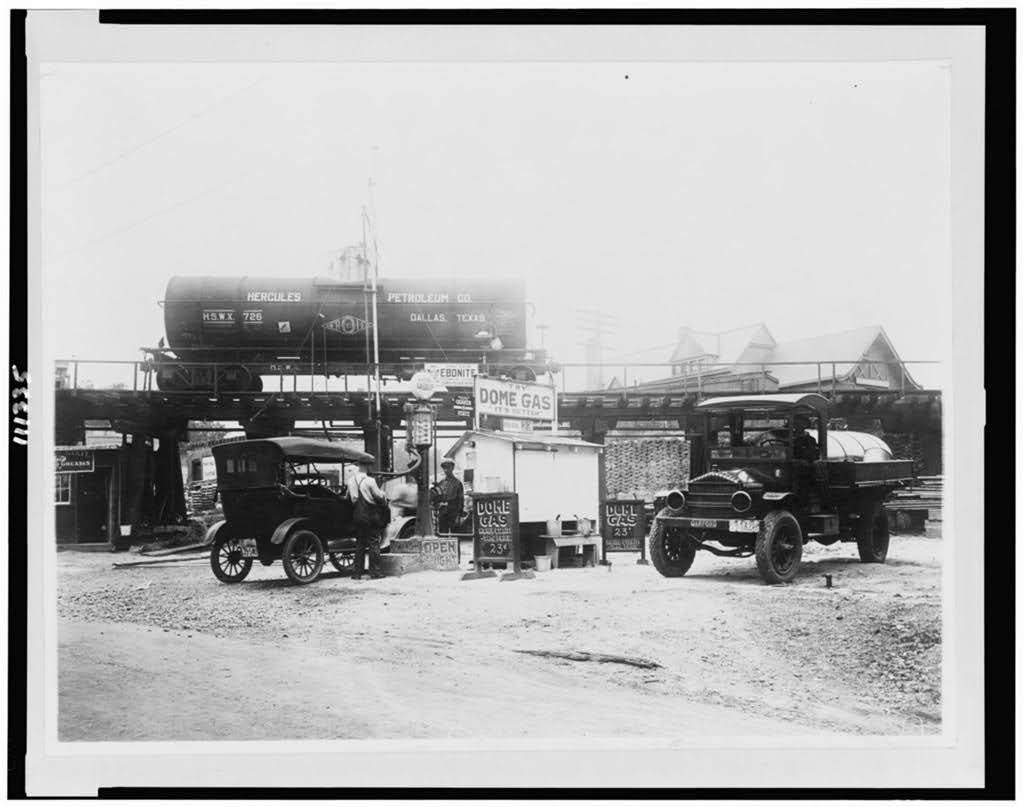
Historic black-and-white photo of a small gas station with two vintage vehicles parked; a fuel tank labeled “Hercules Petroleum Co.” sits on a raised platform behind the station. Signs read “Dome Gas” and offer oil and gas for sale.
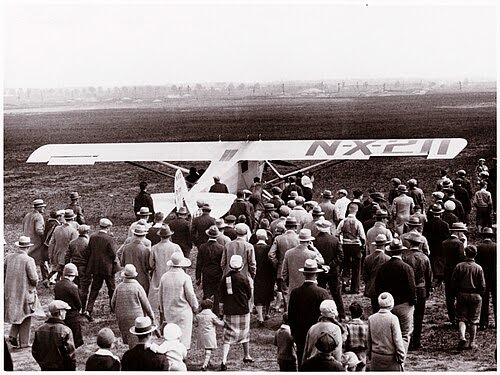
A large crowd gathers around a small white monoplane with "NX-211" on its wing, standing on a grassy field. Most people wear hats and coats, suggesting the scene is from the early 20th century.
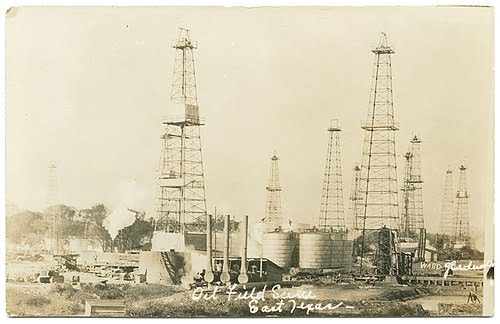
Black-and-white photo of an early oil field in East Texas, featuring multiple tall oil derricks, storage tanks, and various industrial equipment scattered across the site. The image is labeled “Oil Field Scene East Texas.”.
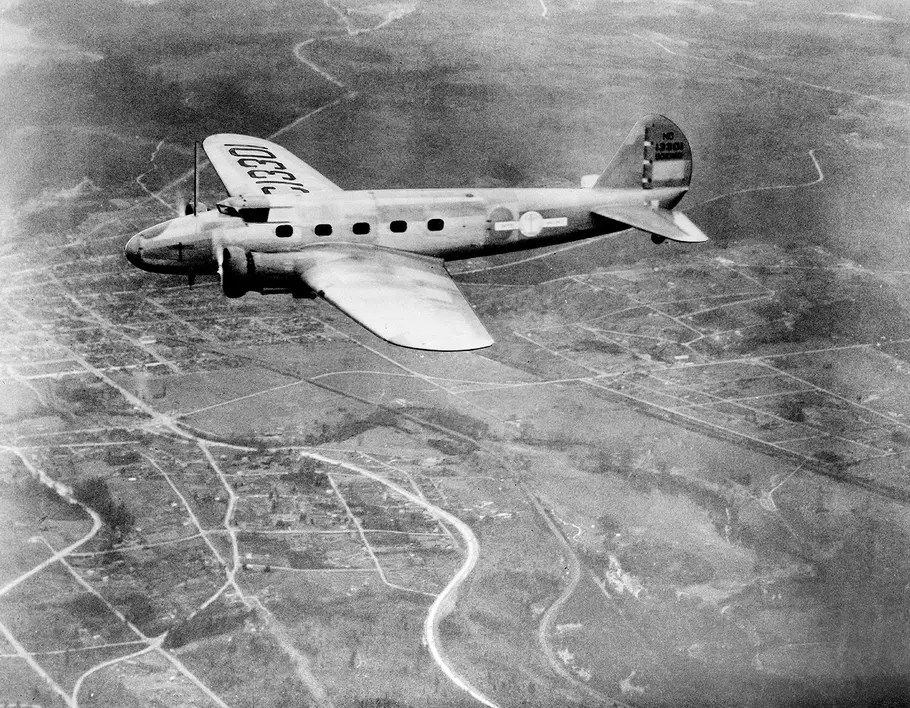
A vintage black and white photo of a military airplane flying above a landscape with visible roads and fields below. The aircraft has a U.S. insignia and markings on its wing and tail.
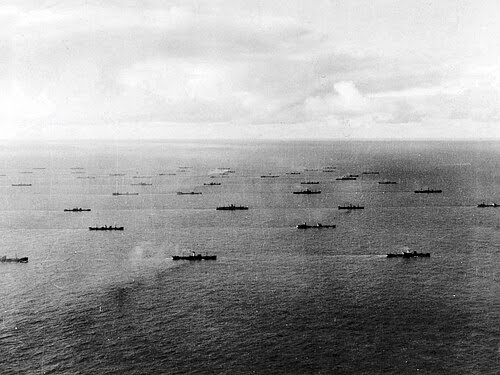
A large fleet of ships, widely spaced, sails across a calm ocean under a mostly cloudy sky; the vessels are spread out in several rows as far as the horizon.
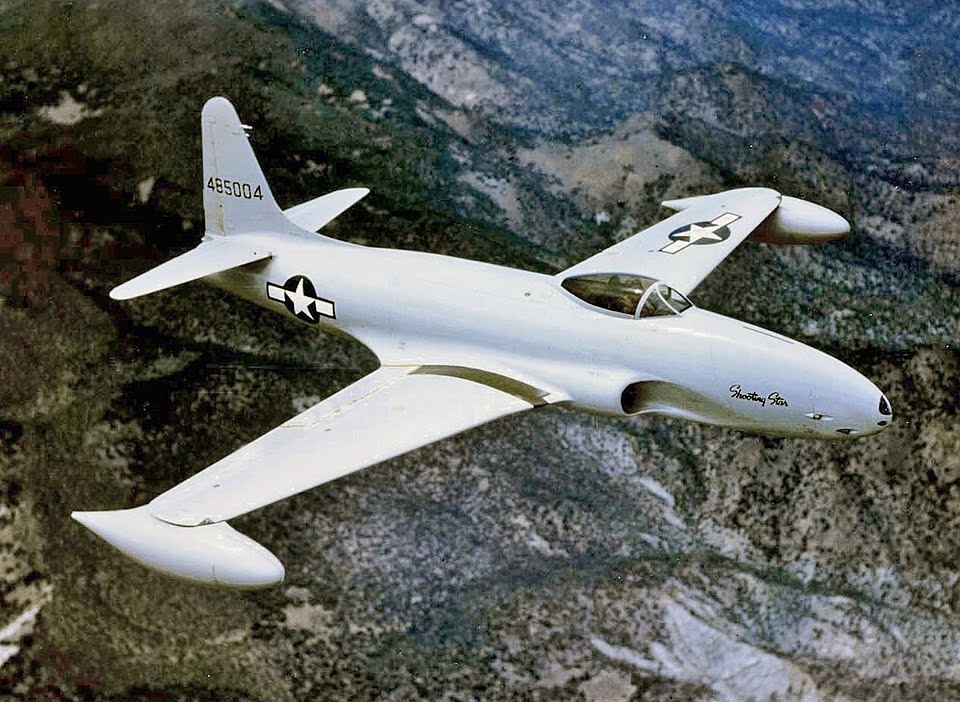
A white military jet with U.S. Air Force markings flies over a mountainous landscape. The aircraft has a sleek, streamlined design and "Shooting Star" written on the nose.
Impact Cheap gasoline enabled suburbia and freedom of movement. Oil refined into fuels, lubricants, and chemicals touched every industry. Aviation became practical, safe, and fast, fueled entirely by petroleum and developed through private innovation.
The Oil Century and Automotive Age
1900s–1940s
Fueling Mobility and Industry

The internal combustion engine, powered by refined petroleum, put America on wheels and in the air. Energy entrepreneurs built massive oil supply chains to meet rising industrial and consumer demand, which powered the U.S. military in two World Wars.

1901 — Spindletop gusher: A dramatic oil discovery in Texas signaled the arrival of oil as a primary fuel. It launched the Texas oil boom and supplied cheap, abundant fuel that powered the coming age of automobiles and aviation.

1907 — Bakelite invented: Chemist Leo Baekeland developed Bakelite, the world’s first fully synthetic plastic, using phenol commonly derived from coal-tar byproducts. The breakthrough showed that fossil fuels could serve not only as sources of heat and power but also as raw materials for entirely new products. Over time, plastics and chemical manufacturing shifted largely to petroleum and natural gas as primary feedstocks, and today, petrochemicals — including plastics, fertilizers, and other synthetic materials — account for roughly 14% of global oil demand.

1908 — Ford Model T: The mass production of the Model T significantly expanded the market for gasoline. When Henry Ford paired it with the moving assembly line in 1913, the price fell from $825 at launch to under $300 by the mid-1920s, putting car ownership within reach of ordinary workers. Registered vehicles surged from roughly 8,000 in 1900 to 23 million by 1929, causing an insatiable new demand for liquid fuel. Refineries expanded, pipelines multiplied, and gas stations became fixtures of every American town. Petroleum, once valued mainly for lighting and lubrication, was now the lifeblood of the American economy.

1920s — Gas stations and refining scale up: The private sector built thousands of gas stations and modern refineries. Motor travel became a staple of American life.

1927 — Lindbergh’s transatlantic flight: Lindbergh traveled from Long Island, New York, to Paris on a single-seat monoplane. Aviation achieved a global milestone using gasoline-powered internal combustion engines.

1930 — East Texas oil boom: Independent prospectors discovered the massive East Texas Oil Field, the largest ever found in the lower 48 states. The surge in domestic production strengthened U.S. energy independence and helped make the nation the world’s leading oil producer.

1930s — Aviation expands: Private air carriers, including American Airlines and United Airlines, developed regular flight service, fueled by oil-based aviation gasoline. Regional economies became more connected.

1941–45 — WWII oil logistics: For the first time, large-scale mechanized warfare made petroleum a decisive strategic resource. In 1940, the United States produced roughly 60% of the world’s oil and ultimately supplied about six of the seven billion barrels consumed by the Allies during the war. To move that fuel safely past German U-boats attacking Atlantic tankers, the government and private industry rapidly built major new pipelines linking Texas oil fields to the East Coast, creating a secure inland supply route capable of delivering hundreds of thousands of barrels per day. Germany’s chronic fuel shortages, by contrast, constrained its strategic options at critical moments. The war demonstrated more clearly than any prior conflict that access to abundant oil had become inseparable from national security.

1940s — America enters the jet age: During World War II, the United States accelerated the development of jet-powered aircraft, introducing the Lockheed P-80 Shooting Star in 1945. Built by Lockheed Corporation, the aircraft demonstrated the speed and performance advantages of jet propulsion powered by refined petroleum fuels. Jet technology would soon transform both military aviation and commercial air travel, laying the groundwork for the modern global airline industry.


Impact Cheap gasoline enabled suburbia and freedom of movement. Oil refined into fuels, lubricants, and chemicals touched every industry. Aviation became practical, safe, and fast, fueled entirely by petroleum and developed through private innovation.
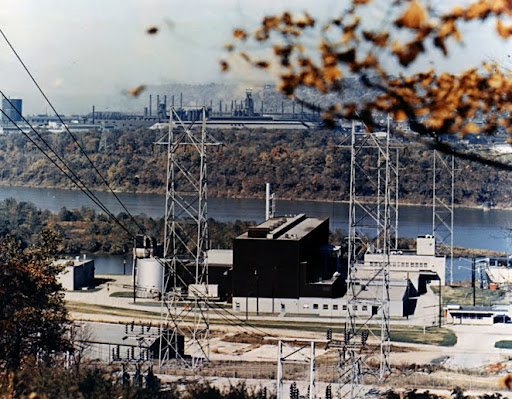
A power plant with tall metal towers and electrical infrastructure sits near a river, surrounded by trees and industrial buildings in the distance; autumn leaves partially frame the scene.
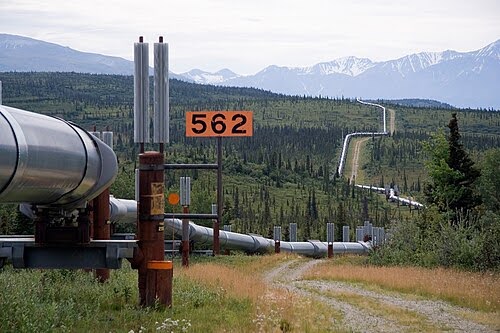
A large pipeline runs through a green, hilly landscape with mountains in the background. A sign marked “562” stands next to the pipeline, which curves into the distance. The scene is outdoors under a cloudy sky.
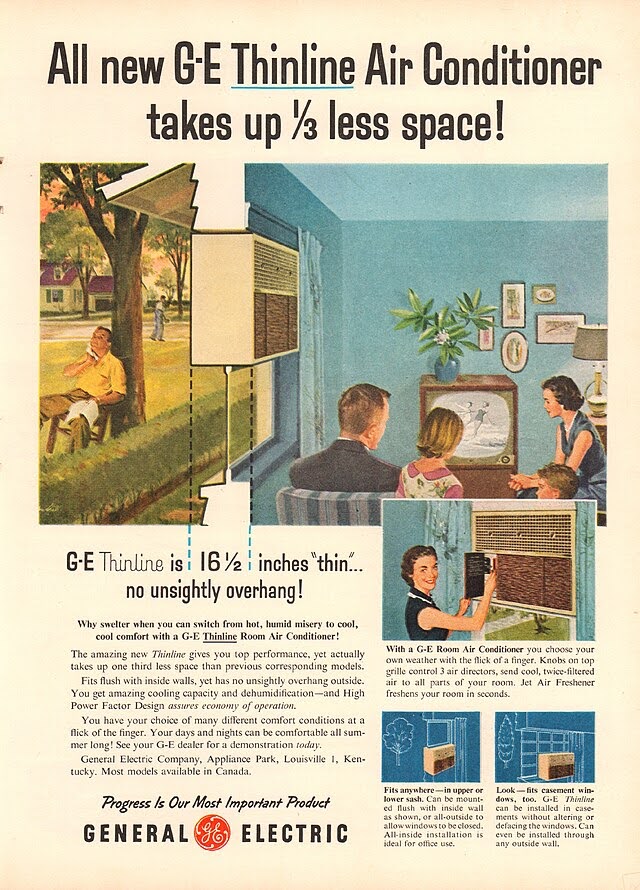
A vintage General Electric ad shows a family in a living room enjoying a G-E Thinline air conditioner mounted in the window, with an illustrated comparison highlighting its slim, space-saving design.
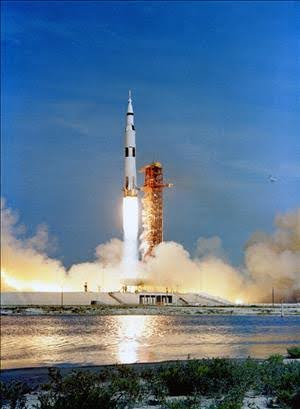
A large rocket launches from its pad, with bright flames and smoke billowing beneath it, against a blue sky. Water and greenery are visible in the foreground.
Impact Millions of homes were built with central heating, air conditioning, and appliances. Air travel became accessible. Industry thrived on reliable electricity.
Postwar Expansion and Suburban Growth
1950s–1970s
Abundance and Affluence

Post-WWII America enjoyed affordable, abundant energy that powered widespread suburbanization, manufacturing dominance, and middle-class comfort — primarily driven by private energy investment and infrastructure.

1957 — First U.S. nuclear plant: The Shippingport Atomic Power Station in Pennsylvania reaches criticality. The potential for abundant, emission-free baseload power began to unfold.

1968 — Discovery at Prudhoe Bay: ARCO and Humble Oil struck the largest oil field ever found in North America on Alaska’s North Slope, containing an estimated 25 billion barrels of oil in place. Oil began flowing through the Trans-Alaska Pipeline in 1977, and Prudhoe Bay eventually reached peak production of about 1.5 million barrels per day, supplying nearly one-fifth of U.S. oil output and dramatically reshaping Alaska’s economy.

1960s — Air conditioning becomes common: A majority of new homes had central air conditioning, and window air conditioners became cheaper. Families began enjoying a new level of comfort and productivity thanks to abundant electricity.

1969 — Moon landing: Fueled by American ingenuity and hydrocarbons, the U.S. achieved a global milestone. Fossil fuels powered the launch and ground systems.

Impact Millions of homes were built with central heating, air conditioning, and appliances. Air travel became accessible. Industry thrived on reliable electricity.
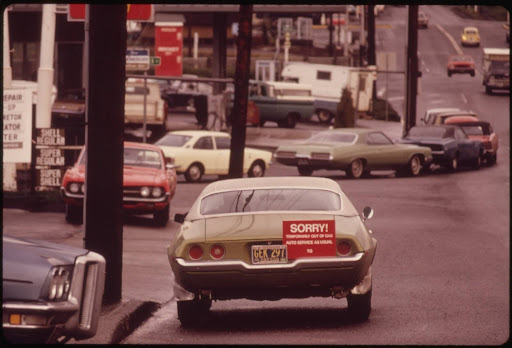
A green car with a large red "SORRY! TEMPORARILY OUT OF GAS" sign is parked on a street lined with other vehicles, near gas stations displaying Shell and Chevron signs. The sky is overcast.
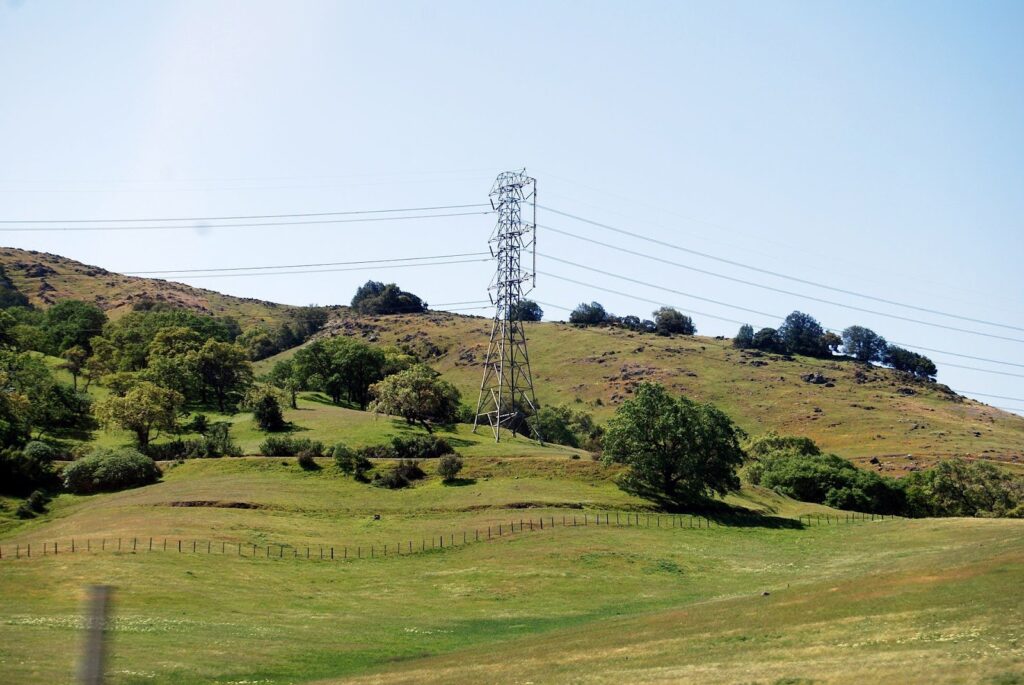
A large power line tower stands on a grassy hillside with scattered trees and a clear blue sky in the background. A fence runs along the green landscape in the foreground.
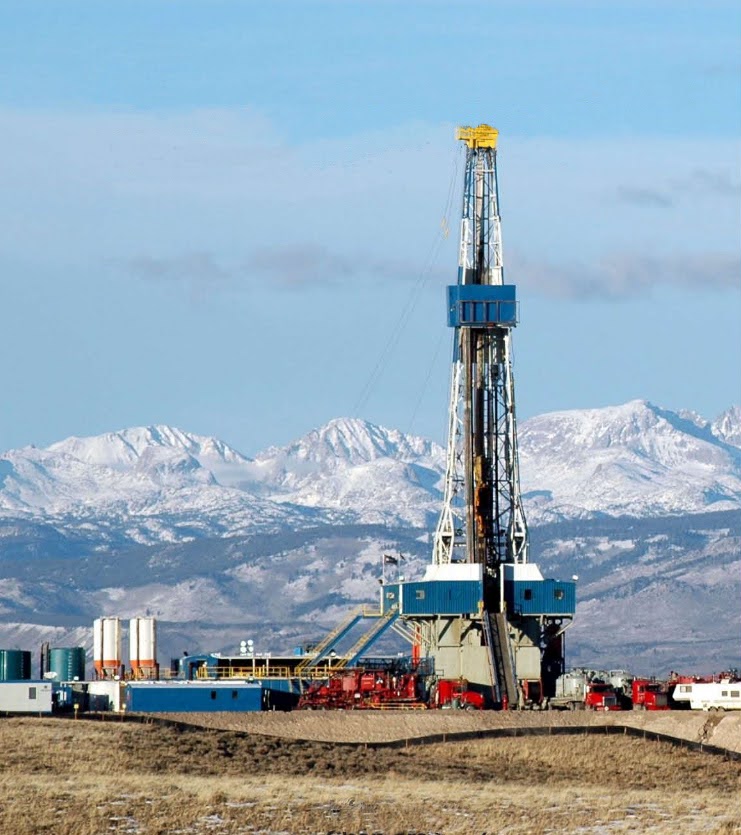
A large oil drilling rig stands in a grassy field with snow-capped mountains in the background. Several storage tanks, buildings, and equipment surround the rig under a clear sky.
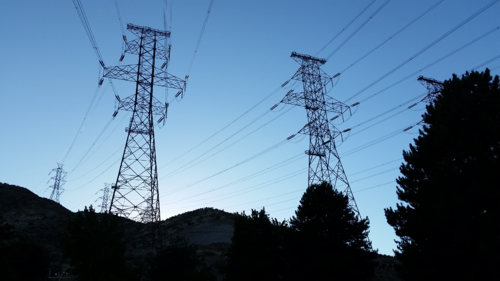
Tall electricity pylons and power lines stretch across a hilly landscape at dusk, with trees and silhouetted hills visible against the evening sky.
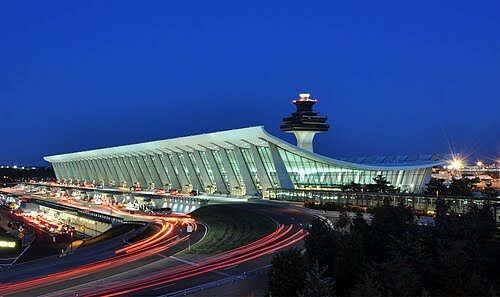
A modern airport terminal with a sweeping, curved roof and illuminated windows at dusk; light trails from moving vehicles are visible in the foreground.
Impact More efficient and diversified generation expanded. Exploration rebounded. Energy supply chains were modernized without central planning.
Resilience and Deregulation
1980s–1990s
Innovation Through Competition

The deregulation of energy sectors unleashed market competition and investment. Entrepreneurs advanced exploration and generation technologies. Private initiative kept energy affordable and resilient through price shocks and global turmoil.

1981 — Oil price controls lifted: Under President Ronald Reagan, oil markets regained efficiency. U.S. producers started responding to demand signals instead of bureaucratic allocation.

1980s — Electricity and gas markets liberalized: States and regions established competitive markets, which benefited consumers through lower prices and more reliable service.

1989 — Natural gas deregulated: The Natural Gas Wellhead Decontrol Act phased out price controls, setting the stage for increased production.

1990s — Rise of independent power producers: For much of the twentieth century, American electricity was dominated by regulated monopoly utilities that controlled power generation and distribution within their service territories. The Energy Policy Act of 1992 helped open the door to competition by allowing new independent generators to sell electricity into wholesale markets. Later regulatory changes required utilities to provide open access to their transmission networks, enabling private companies to build and finance power plants outside the traditional utility system. Independent producers moved quickly, constructing efficient gas-fired plants that often delivered electricity at lower cost.

1990s — Airline expansion: Following the deregulation of the airline industry in 1978, competition reshaped air travel in the United States. By the 1990s, expanding airline networks and falling ticket prices brought millions of new passengers into the skies each year. This rapid growth depended on abundant, affordable energy, as commercial aviation runs almost entirely on petroleum-based jet fuel. Airlines added routes, increased flight frequency, and connected more cities while reliable supplies of refined petroleum helped make fast, long-distance travel routine.

Impact More efficient and diversified generation expanded. Exploration rebounded. Energy supply chains were modernized without central planning.
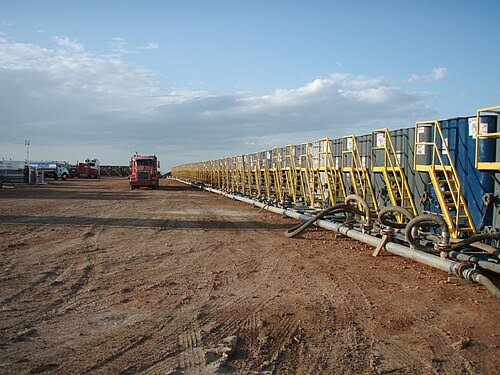
A row of yellow and blue industrial equipment, likely used for oil or gas extraction, is lined up on a dirt lot under a blue sky with scattered clouds; a red truck is parked nearby.
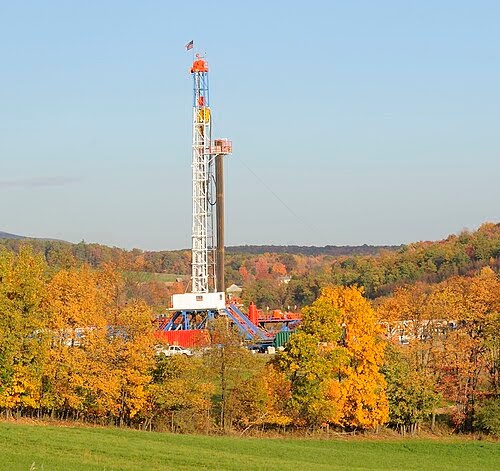
A drilling rig stands among colorful autumn trees in a rural landscape under a clear blue sky, with distant hills visible in the background.
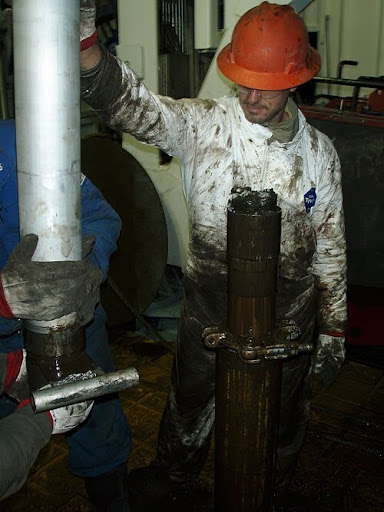
A worker in a dirty orange hard hat and oil-stained coveralls handles a large, muddy metal pipe on an industrial worksite, while another gloved worker assists.
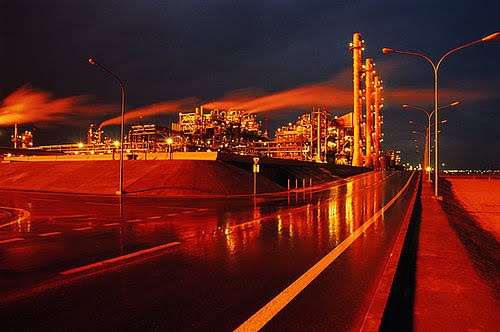
A brightly lit industrial plant at night emits steam or smoke, reflecting orange and yellow lights on the wet road and surrounding area under a dark sky. Tall streetlights line the roadway.
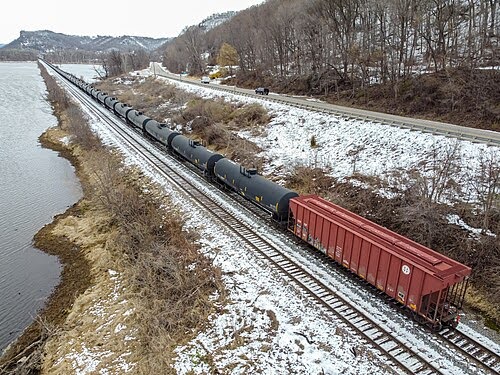
A long freight train with black tanker cars and a single red boxcar travels along snowy tracks beside a river, with a road and leafless trees on the right and hills in the background.
Impact Gas prices fell, manufacturing rebounded, and geopolitical leverage increased. Consumers benefited from lower utility and fuel costs.
The Shale Revolution
2000s–2010s
American Energy Renaissance

Hydraulic fracturing and horizontal drilling — developed by independent firms — unlocked massive oil and natural gas reserves in shale rock, making the U.S. the world’s top energy producer. This transformation strengthened the economy and energy independence.

1998–2003 — Fracking commercialized: George Mitchell, founder of Mitchell Energy, spent nearly two decades perfecting hydraulic fracturing techniques in the Barnett Shale of north Texas. His team’s breakthrough in the late 1990s proved shale could be drilled profitably, beginning the first wave of shale gas production.

2008 — Shale boom accelerates: Drilling in the Barnett, Haynesville, and Marcellus shales increased dramatically, flooding markets with new supply. Henry Hub natural gas prices fell from a 2008 peak above $12 per MMBtu to under $3 by 2009, sharply lowering energy costs for households and industry.
2010 — Oil follows gas: The Bakken and Eagle Ford fields produced millions of barrels daily. America’s import dependency declined.

2015 — Crude oil export ban lifted: For the first time since 1973, U.S. oil hit global markets, allowing private producers to gain access to international demand.

2019 — Net exporter status achieved: The U.S. became a global energy leader as domestic output exceeded imports.

Impact Gas prices fell, manufacturing rebounded, and geopolitical leverage increased. Consumers benefited from lower utility and fuel costs.
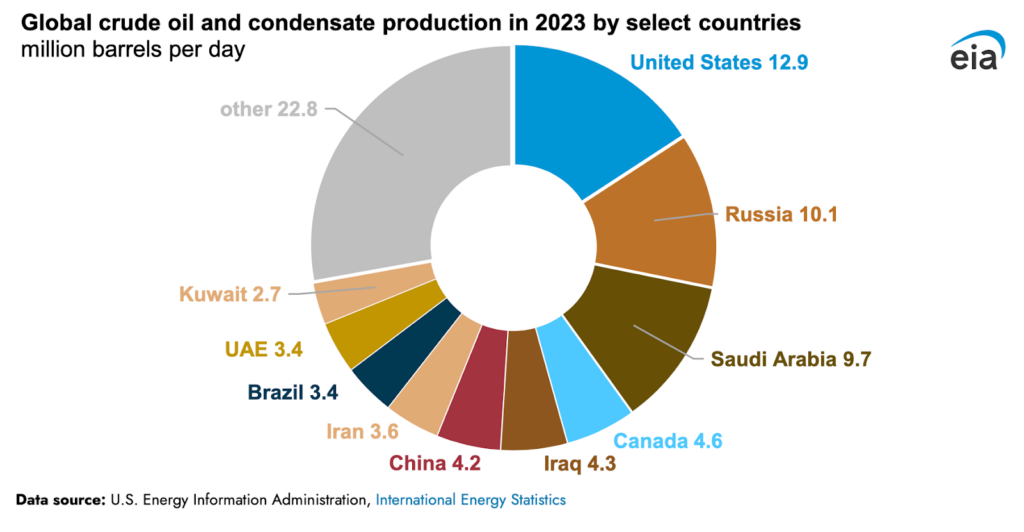
A donut chart showing global crude oil and condensate production in 2023 by country. The U.S. leads with 12.9 million barrels/day, followed by Russia (10.1), Saudi Arabia (9.7), and others. Data source: U.S. EIA.

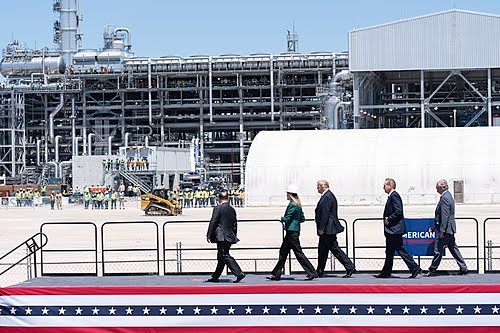
Five people in business attire walk in a line outside an industrial facility with metal pipes and structures, while workers stand in the background. A stage with an American flag pattern is in the foreground.
A healthcare worker in protective gear and a face shield attends to a patient lying in a hospital bed, adjusting medical equipment in a dimly lit hospital room.
A woman speaks at a podium in a formal setting, with two people seated behind her and European Parliament symbols visible on the blue panels.
Impact The U.S. economy gained flexibility, security, and leverage abroad. Domestic supply protected consumers from global disruptions. Cleaner air and abundant energy coexisted through innovation.
Energy Independence and Innovation
2010s–2020s
Freedom Through Abundance

Market-driven innovation has made energy cleaner and more abundant. Natural gas replaced coal in power generation, lowering emissions. U.S. energy exports supported allies and reduced foreign dependence.

2016 — U.S. tops global production: Outpacing Russia and Saudi Arabia, America gained the lead in oil and gas, making supply security a strength.

2016–2019 — LNG export infrastructure built: Gulf Coast terminals enabled global gas trade. American gas reached Europe and Asia for the first time.

2020 — COVID-19 stress test: U.S. energy systems proved resilient amid supply chain disruptions. Infrastructure and producers adapted quickly to demand shocks.

2022 — European energy crisis: America’s private LNG producers step up in a global emergency caused by the Russian invasion of Ukraine.

Impact The U.S. economy gained flexibility, security, and leverage abroad. Domestic supply protected consumers from global disruptions. Cleaner air and abundant energy coexisted through innovation.